
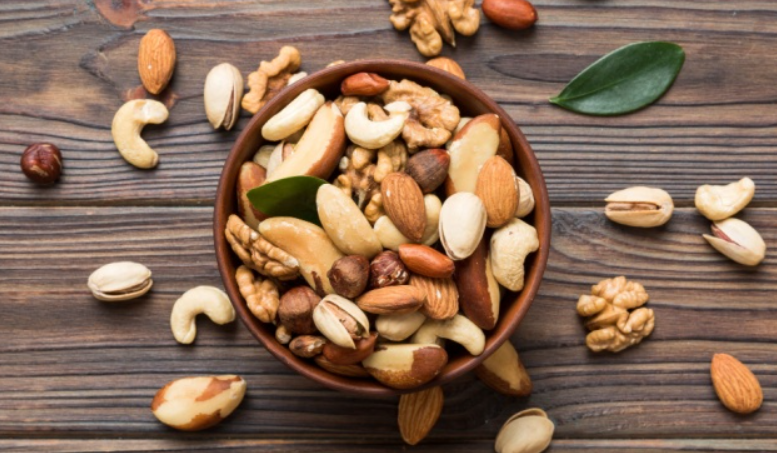
If you’ve ever wondered, “are nuts good for you?” you’re not alone.
Nuts get a lot of attention in the health and wellness world, and for good reason. These little powerhouses deliver healthy fats, protein, fiber, vitamins and minerals in a compact form.
What are the health benefits of nuts? They’ve been shown in research to potentially benefit heart health, metabolic health, brain health and more.
Do these benefits extend to all nuts? For instance, are Brazil nuts good for you? What about pine, macadamia and mixed nuts?
Keep reading to find out.
Health benefits of nuts
When it comes to healthy aging, few foods pack as many benefits per bite as nuts. Regular nut consumption has been linked to numerous positive health outcomes, from cardiovascular health support to metabolic health.
Below are some of the most well-researched and meaningful health benefits of nuts.
1. Support heart health
Nuts are rich in heart-beneficial monounsaturated and polyunsaturated fats, which can help cholesterol levels remain balanced. Multiple human studies published in journals such as the American Journal of Clinical Nutrition have shown that nut consumption may help keep the heart healthy and support overall healthy lipid profiles.
Magnesium, arginine and antioxidants like vitamin E found in nuts also support overall health.
2. Help with healthy weight management and metabolism
Despite being high in calories, nuts are surprisingly weight friendly. Their combination of healthy fats, fiber and protein promotes satiety, meaning they help you feel full longer and can help manage overall calorie intake.
Research in the journals Obesity Reviews and Nutrients, for instance, has relayed that people who regularly eat nuts tend to have healthier body weights and lower waist circumferences. Nuts also help maintain balanced blood sugar, which supports normal insulin sensitivity and metabolic function.
3. Provide antioxidants
Nuts, especially walnuts, pecans and Brazil nuts, are packed with antioxidants like polyphenols, selenium and vitamin E. These compounds help the body have a healthy inflammatory response and promote healthy aging.
Antioxidants also promote healthy cell membranes and DNA, supporting vitality and immune system health.
4. Support brain health and cognitive function
The healthy fats, polyphenols and micronutrients in nuts nourish the brain. Walnuts, in particular, are rich in omega-3 ALA, which supports memory, focus and cognitive performance.
Research published in the Journal of Nutrition, Health and Aging even suggested that frequent nut consumption may be linked to better mental function as people age.
5. Promote gut and digestive health
Nuts contain prebiotic fibers that feed beneficial gut bacteria. Studies published in the Journal of Nutritional Biochemistry have found that adding nuts like almonds or pistachios to the diet can increase levels of healthy gut microbes, supporting digestion and a healthy immune system.
A healthy gut microbiome also contributes to overall hormone balance, nutrient absorption and a healthy inflammatory response.
6. May support healthy aging
Long-term cohort studies, including research published in the New England Journal of Medicine, have shown that people who eat nuts regularly tend to live longer and have support for overall cardiovascular and metabolic health. The combination of fiber, unsaturated fats, minerals and antioxidants likely contributes to this beneficial effect.
What are the healthiest nuts?
Not all nuts are identical, but many share similar core benefits. Below are some standouts.
1. Brazil nuts
These big tree nuts punch above their weight in selenium, a trace mineral with roles in antioxidant systems and thyroid function. A single Brazil nut can provide more than 100 percent of the recommended daily intake for selenium.
That means when you ask, “Are Brazil nuts good for you?”, the answer is clearly yes … at least when eaten in moderation. Because they are so rich in selenium, just one to two nuts per day may meet your needs, and excessive consumption may raise selenium levels too high, which is something to be mindful of.
2. Pine nuts
Often overlooked, pine nuts offer good amounts of monounsaturated fats and magnesium, and they’re a nice aromatic addition to pesto, salads or side dishes. Because of their fat content and micronutrients, asking “are pine nuts good for you?” again yields a yes, with the caveats of portion size and preparation (see later sections).
3. Macadamia nuts
Macadamias are among the richest in healthy fats (especially monounsaturated fats) but also among the highest-calorie nuts. When the question “are macadamia nuts good for you?” comes up, the answer is yes in terms of nutrient quality, but because of their calorie density, they require more deliberate portion control.
4. Almonds
Almonds are among the most nutrient-dense nuts. They’re high in vitamin E, magnesium and plant-based protein, and they help support blood sugar balance, heart health and skin health.
Research suggests almond consumption can help keep cholesterol balanced and aid weight management by promoting satiety.
5. Pistachios
Pistachios are one of the best nuts for supporting healthy blood sugar and circulation. They’re rich in fiber, antioxidants, and carotenoids like lutein and zeaxanthin, which support eye health.
They also offer one of the highest protein contents per serving among nuts.
6. Cashews
Cashews have a creamy texture and are rich in copper, zinc and magnesium. These minerals are essential for energy metabolism and healthy immune system function.
Their healthy fats can benefit heart health, and moderate intake may help maintain healthy blood pressure and lipid levels.
7. Hazelnuts
Hazelnuts are a great source of monounsaturated fats, folate and vitamin E. They help promote a healthy response to oxidative stress and support brain and skin health.
Studies suggest hazelnuts may help keep cholesterol levels in check.
8. Peanuts
Though technically legumes, peanuts are nutritionally like tree nuts and carry similar benefits. They’re high in niacin, folate and resveratrol, a plant compound linked to heart and brain protection.
9. Pecans
Pecans are rich in antioxidants, healthy fats and manganese. Regular consumption may help with inflammation, blood lipid profiles and healthy digestion thanks to their fiber content.
10. Walnuts
Walnuts are unique for their high omega-3 fatty acid content, which supports heart, brain and joint health. They also provide polyphenols that help respond to inflammation throughout the body.
Consistent walnut intake has been associated with improved cognitive function and heart health.
11. Mixed nuts
When you see a bag of “mixed nuts,” you’re getting a blend of several types, so you benefit from a diversity of nutrients. The question “are mixed nuts good for you?” is a good one, and yes, they are a smart snack choice, provided you select the right variety (unsalted, dry-roasted or raw) and keep portions sensible.
Research shows mixed nut consumption can support cardiovascular health and mood.
|
Nut Type |
Headline Benefit |
Consideration |
|
Almonds |
Vitamin E + heart health support |
May trigger nut sensitivities |
|
Pistachios |
Fiber + blood sugar balance |
Avoid salted or flavored types |
|
Cashews |
Mineral-rich + energy metabolism |
Higher carb content |
|
Hazelnuts |
Vitamin E + antioxidant protection |
Often used in sweets |
|
Peanuts |
Heart + metabolic support |
Technically legumes |
|
Pecans |
Inflammatory response + gut support |
Very calorie-dense |
|
Walnuts |
Omega-3s + brain function |
Can go rancid if not stored well |
|
Brazil nuts |
Selenium + thyroid support |
Limit to 1-2 daily |
|
Pine nuts |
Magnesium + appetite control |
Watch for added oils |
|
Macadamia nuts |
Monounsaturated fats + heart health |
High in calories |
|
Mixed nuts |
Nutrient diversity + convenience |
Choose unsalted/raw versions |
Nutrition facts
Nuts are calorie-dense but nutrient-dense. They deliver healthy fats, moderate protein, low carbs and an impressive range of micronutrients including copper, manganese and magnesium.
According to the U.S. Department of Agriculture, a one-ounce serving of dry-roasted mixed nuts (about 28.35 grams) contains approximately:
-
Calories: 172
-
Total Carbohydrates: 6.4 g
-
Fiber: 1.8 g
-
Sugar: 1.4 g
-
Total Fat: 15.2 g
-
Saturated Fat: 2.3 g
-
Polyunsaturated Fat: 2.8 g
-
Monounsaturated Fat: 9.8 g
-
Trans Fat: 0.01 g
-
Protein: 5.5 g
-
Sodium: 1.1 mg (<1% DV*)
-
Copper: 0.4 mg (44% DV*)
-
Manganese: 0.7 mg (30% DV*)
-
Magnesium: 64.4 mg (15% DV*)
-
Zinc: 1.2 mg (11% DV*)
-
Niacin: 1.8 mg (11% DV*)
-
Vitamin E: 1.7 mg (11% DV*)
-
Phosphorus: 124 mg (10% DV*)
-
Thiamine: 0.1 mg (8% DV*)
-
Riboflavin: 0.1 mg (8% DV*)
-
Vitamin B6: 0.1 mg (6% DV*)
-
Iron: 1.1 mg (6% DV*)
-
Selenium: 2.6 mcg (5% DV*)
-
Potassium: 182 mg (4% DV*)
-
Folate: 17 mcg (4% DV*)
*Daily Value: Percentages are based on a diet of 2,000 calories a day.
They also provide some calcium, vitamin C and vitamin K.
Mixed nuts are low to moderate on the glycemic index (around 24), which means they’re unlikely to spike blood sugar when eaten in moderation.
What does this mean for you?
-
Nuts are calorie-dense: even a small handful adds up in energy.
-
They provide a blend of macronutrients: mostly fat, moderate protein, low carbs.
-
They also deliver key micronutrients: magnesium, copper, manganese, selenium (depending on type) and antioxidants.
-
When you opt for mixed nuts, you get beneficial variety but also need to be aware of portion size.
Best ways to eat nuts
Getting the benefit from nuts is not just about which type you eat, but how. Here are guidelines and tips.
1. Choose raw or dry-roasted, unsalted
Salted and heavily roasted nuts (especially with sugar/coating) introduce added sodium or refined sugar, which can detract from the benefits. Raw or dry-roasted are preferred to stay within a heart-healthy diet.
2. Use nuts as snack replacement, not addition
One key tip is to eat nuts instead of less healthy snacks (like chips and cookies) rather than on top of your usual diet. This is the recommended approach to avoid unintended weight gain.
3. Incorporate into meals
-
Sprinkle pine nuts or chopped macadamias onto salads or steamed vegetables.
-
Blend a small handful of mixed nuts into yogurt or oatmeal for added texture, healthy fats and micronutrients.
-
Use one to two Brazil nuts daily (in recognition of their high selenium content) as part of your morning snack.
-
Make homemade nut mixes: raw almonds, walnuts, pine nuts, Brazil nuts, keeping portions to about one ounce per serving.
4. Be mindful of portion size
Given their calorie density, one ounce (a small handful) is a common serving size recommendation for many nuts. Going beyond that, especially without cutting back elsewhere, can lead to excess caloric intake.
5. Try these recipes
Here are some recipes that include some of the healthiest nuts around:
Cautionary notes about nuts
While nuts are broadly healthy for many people, there are some caveats to consider.
Calories and weight gain potential
Because nuts are high in fat (albeit healthy fat) and thus high in calories, overconsumption can lead to more energy intake than you realize.
Allergies
Nut allergies (especially tree nut allergies) can be severe, even life-threatening. The broader category of “nuts” requires caution for people with known food allergies.
Selenium excess (for Brazil nuts)
Because Brazil nuts are extremely high in selenium, consuming large amounts (e.g., 10+ Brazil nuts daily) can push selenium intake beyond safe limits. Moderation is important.
Aflatoxin risk
Some nuts (including Brazil nuts) can become contaminated with aflatoxins (a fungal toxin) when improperly stored or processed. One analysis flagged this risk in nuts in general.
Preparation matters
Nuts that are salted, sugar-coated or roasted in oil may carry added sodium, sugar or unhealthy fats. These reduce the overall health value.
Digestive issues
For people with sensitive digestion, nuts may cause gas, bloating or discomfort when eaten in large amounts. The fiber and fat content mean they’re best introduced gradually if you’re not accustomed to them.
Conclusion
-
So, are nuts good for you? Absolutely, when eaten thoughtfully. The health benefits of nuts range from healthy heart and brain support to gut and metabolic support.
-
The healthiest nuts include Brazil nuts, pine nuts, macadamia nuts, almonds, pistachios, cashews, hazelnuts, peanuts, pecans and walnuts.
-
Nuts are calorie-dense but nutrient-dense. They include healthy fats, moderate protein, and an impressive range of micronutrients including copper, manganese and magnesium.
-
When eating, choose raw or dry-roasted, unsalted types. And be mindful of serving sizes, for nuts are high in calories
Written By: Joe Boland
Shared from https://ancientnutrition.com/blogs/all/benefits-of-nuts